
Black Friday is an annual bandwagon that most brands choose to jump on, and rightly so. Especially given the year businesses have been through, no one can blame companies for wanting to encourage some extra sales.
But, in a sea of promotions, PR stunts, and discounts, how do brands get their offering noticed?
Today, I’m looking at the best and worst marketing from brands on Black Friday 2020.
Amazon 2/5
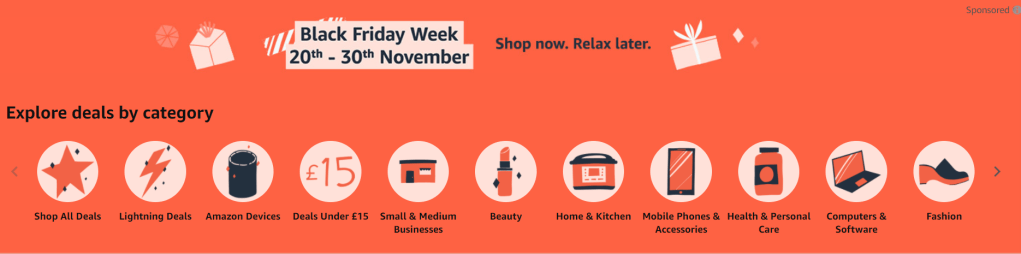
Let’s get it out the way. Amazon may be a horrible corporate monster, but up until recent years they have been the go-to spot for many consumers on Black Friday. In 2018, 48% of Brits reported planning to buy from Amazon on Black Friday.
Why? Ease and accessibility, I think. As a nation, we’ve gotten lazy and have begun to expect instant satisfaction from retail, we don’t want to wait for things, or put in effort when shopping and Amazon have capitalised on that.
This year was more of the same. Amazon had a gargantuous Black Friday offering – the main difference? They included a tab with products from small businesses. A nice nod, but not enough.
Cards Against Humanity 4/5
The first brand that I tend to look to is Cards Against Humanity, not because I am a customer or even a fan, but because they always seem to pull a PR stunt for Black Friday. You may have heard of their past campaign, leaving a payment form on their website for visitors to pay them £5 – why? No reason!
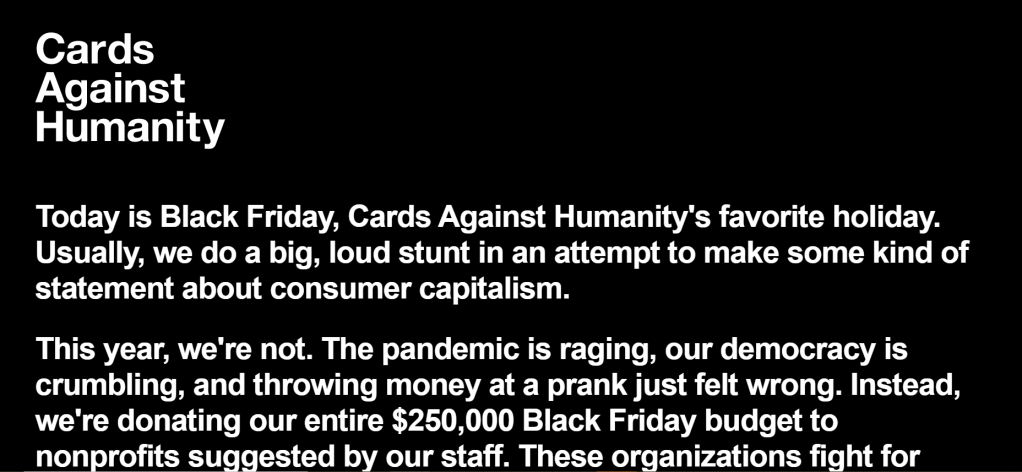
This year, they scrapped the pranks and focused on the real issues. They chose to donate their entire $250,000 Black Friday budget to non-profits that their staff suggested.
The brand knows that people go to their site on Black Friday to see what they’re up to, and they used their platform to spread a good message.
Positive PR for their brand and doing good at the same time – nice, we love to see it.
Pretty Little Thing 0/5
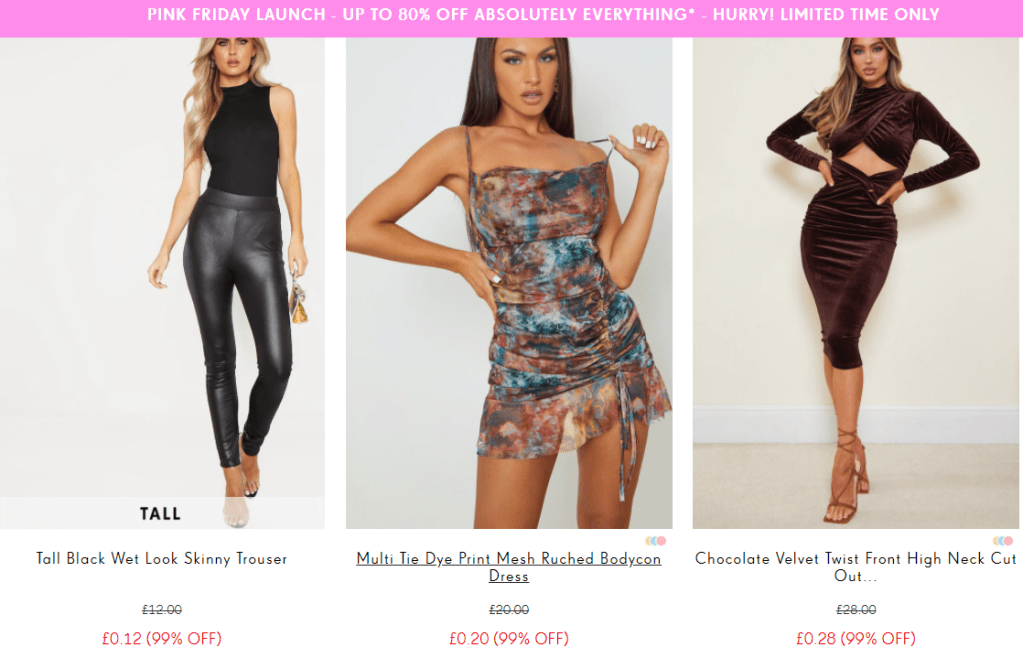
Pretty Little Thing (PLT) completely missed the point with their ‘Pink Friday’ offering. With some items reduced up to 99% off their original price, this online fashion brand demonstrated everything that’s wrong with fast fashion.
Boohoo, parent of PLT and Nasty Gal, were embroiled in controversy earlier this year when it surfaced that they were paying their workers as little as £3.50 an hour. Followed by this discount frenzy, which has no place in 2020, the brand shows no regard for the latest fast fashion kickback, climate issues, or labour abuse.
I’d give it minus points if I could.
Patagonia 5/5
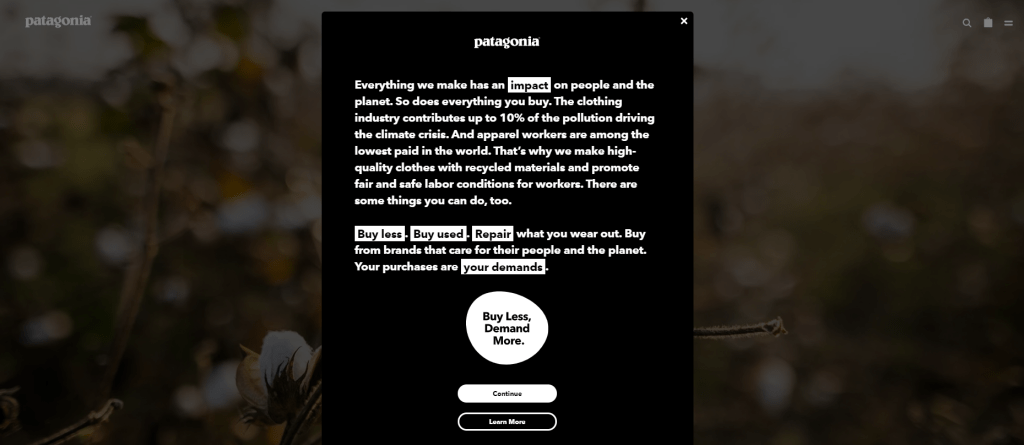
Patagonia are another brand who have boycotted the Black Friday hoo-ha. In previous years, they’ve run a ‘100% of proceeds go to saving the environment’ campaign, but this year’s a bit different. – https://www.prodo.com/blog/best-black-friday-marketing-campaigns
“Buy Less, Demand More” is an initiative pushing for a circular economy. This campaign integrates the company’s four-year-old ‘Worn Wear’ program which encourages recycling and repurposing used clothing and gear.
Now, customers shopping for new clothing items will see a button that takes them to refurbished alternatives on their ‘trade-in’ platform – sold at a lower price, of course, whilst simultaneously fighting against fast fashion.
I think this offering will encourage sales and appears to be an initiative with some longevity – 5/5.
Video for the campaign can be found here.
Ted Baker 3/5
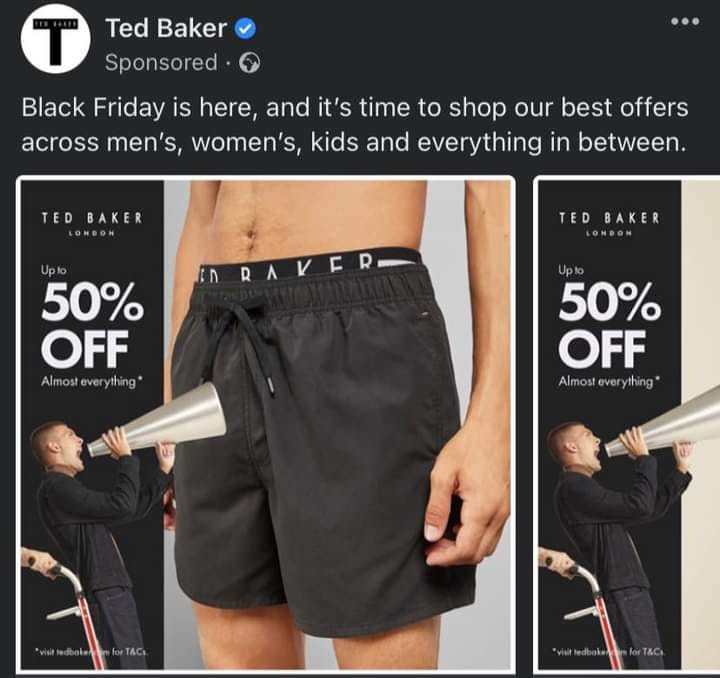
Ted Baker didn’t have a particularly standout offering this year, but they gained a lot of attention on social media for their unfortunate choice of graphic overlay for their Facebook Catalogue ads.
You may have seen this screenshot posted on your timeline and, no, I don’t think this was done purposefully as a marketing stunt. It appears the marketing team chose an overlay to use on their catalogue ads and didn’t consider how it would work with their entire range of products (understandable – who has the time for that?!). But, unfortunately, the graphic didn’t work so well with certain products.
A mishap? Yes, clearly. BUT I think this was a bit of a happy accident, because a lot of people ended up talking about Ted Baker and searching them on socials, which will have consequently led to an increase in website traffic.
GiffGaff 3/5
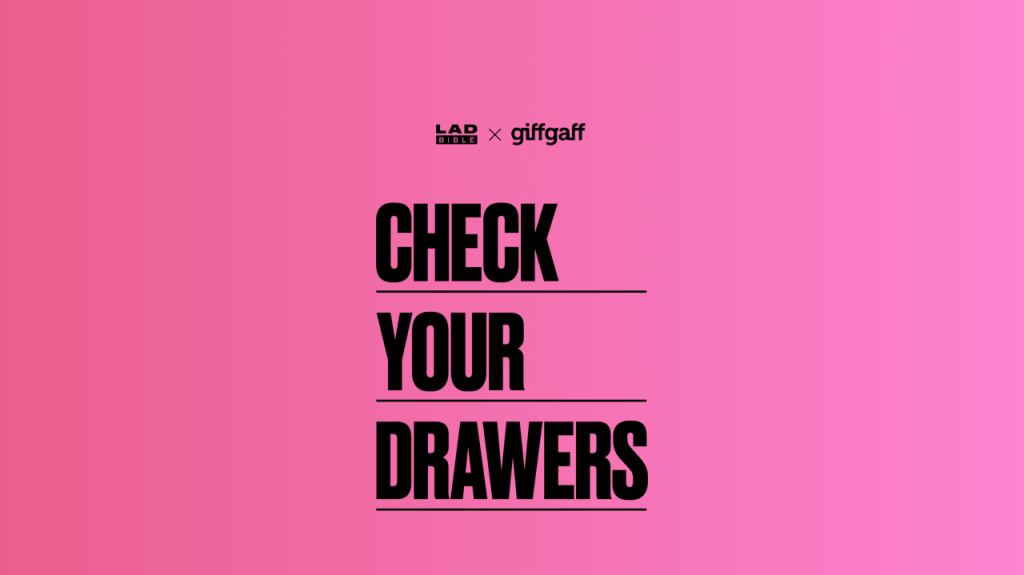
GiffGaff partnered with LadBible for their Black Friday campaign: ‘Check your drawers’. The aim is to encourage mindful consumption by imploring the nation to reacquaint themselves with the contents of their drawers, specifically old mobile phone handsets.
GiffGaff explain that their ambition is to create a circular economy and build a sustainable model for the industry by getting these preloved devices back into circulation.
Clearly a great initiative regarding sustainability with some positive PR thrown in, but I’m not sure how well this will encourage future sales.
Video for the campaign can be found here.
AllBirds 3/5

AllBirds – have you heard of them before? I hadn’t, but I’m not exactly their target audience.
However, I did hear about their “Break tradition, not the planet” campaign. Another brand against Black Friday this year, instead of throwing customers a discount, AllBirds have raised their prices as a stand against consumerism. Each product has had its price increased by $1 which will be matched by the brand and donated to Greta Thunbergs’s Climate Strike movement ‘Fridays for Future’.
Whilst I admire their strong stance against consumerism, I’d be interested to see if this campaign paid off in the way of sales. Brands can strive for a greener fashion economy all they like, but the end game continues to be achieving sales and making money, right?
Interesting campaign nonetheless, anything fighting against fast fashion is good with me.
Deciem 4/5
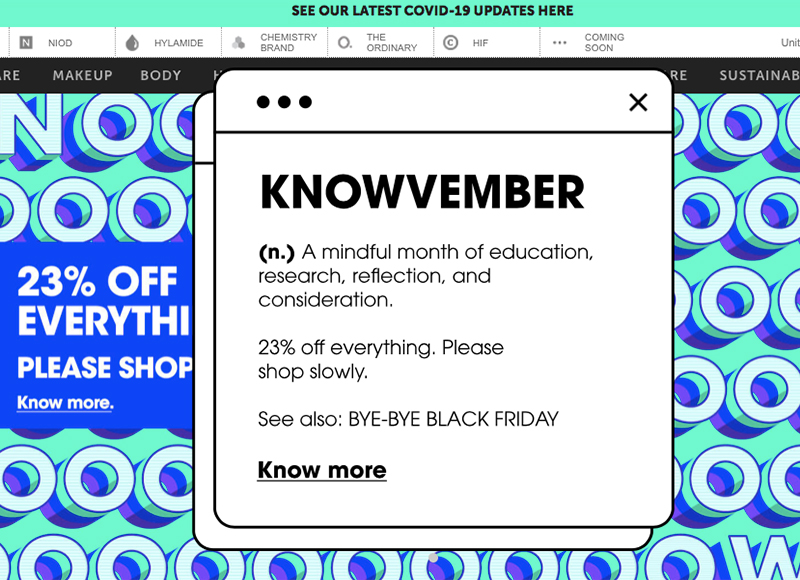
Deciem, parent company of The Ordinary (amongst others), are another brand that decided to boycott Black Friday this year. Instead they are discounting their products by 23% for the whole of November.
They’ve titled this campaign Knowvember as they say they’ll be raising awareness of the climate crisis in the process. This sounds a bit like virtue signalling to me, but I genuinely think this will drive sales in the run up to Christmas.
Also, I really agree with this quote from Deciem co-founder and chief executive Nicola Kilner: “The reality is that if you wouldn’t pay full price for it, it’s probably not something that you truly did need in the first place.”. Spot on.
Video for the campaign can be found here.
Summary
All in all, this year has brought much of the same in terms of Black Friday marketing campaigns. You have those who resist and protest against consumerism, and those who follow the crowd (sometimes at the expense of the environment and their workers – looking at you, PLT).
Black Friday can be a great opportunity for businesses, especially those smaller companies who have really struggled this year, but there is definitely a right and wrong way to go about things.

 Grace Appleby