Review of Black Friday marketing efforts by brands 2020

Black Friday is an annual bandwagon that most brands choose to jump on, and rightly so. Especially given the year businesses have been through, no one can blame companies for wanting to encourage some extra sales.

But, in a sea of promotions, PR stunts, and discounts, how do brands get their offering noticed?

Today, I’m looking at the best and worst marketing from brands on Black Friday 2020.

Amazon 2/5
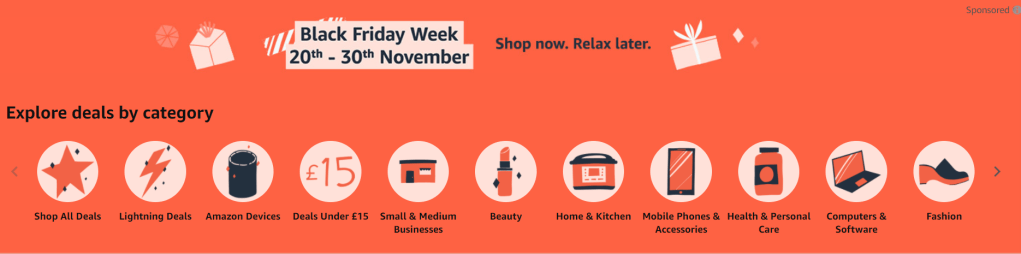
Let’s get it out the way. Amazon may be a horrible corporate monster, but up until recent years they have been the go-to spot for many consumers on Black Friday. In 2018, 48% of Brits reported planning to buy from Amazon on Black Friday.

Why? Ease and accessibility, I think. As a nation, we’ve gotten lazy and have begun to expect instant satisfaction from retail, we don’t want to wait for things, or put in effort when shopping and Amazon have capitalised on that.

This year was more of the same. Amazon had a gargantuous Black Friday offering – the main difference? They included a tab with products from small businesses. A nice nod, but not enough.

Cards Against Humanity 4/5
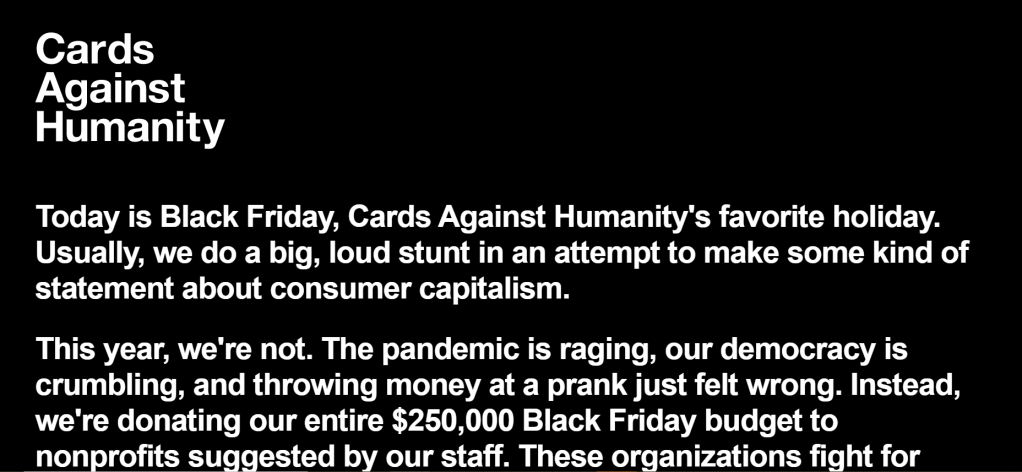
The first brand that I tend to look to is Cards Against Humanity, not because I am a customer or even a fan, but because they always seem to pull a PR stunt for Black Friday. You may have heard of their past campaign, leaving a payment form on their website for visitors to pay them £5 – why? No reason!

This year, they scrapped the pranks and focused on the real issues. They chose to donate their entire $250,000 Black Friday budget to non-profits that their staff suggested.

The brand knows that people go to their site on Black Friday to see what they’re up to, and they used their platform to spread a good message.

Positive PR for their brand and doing good at the same time – nice, we love to see it.

Pretty Little Thing 0/5
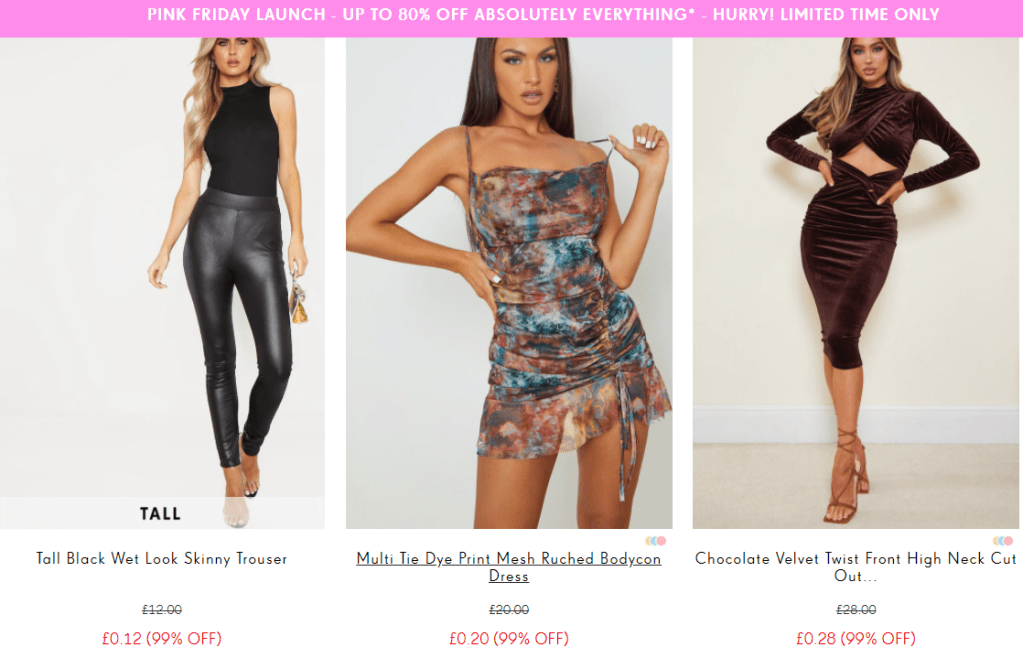
Pretty Little Thing (PLT) completely missed the point with their ‘Pink Friday’ offering. With some items reduced up to 99% off their original price, this online fashion brand demonstrated everything that’s wrong with fast fashion.

Boohoo, parent of PLT and Nasty Gal, were embroiled in controversy earlier this year when it surfaced that they were paying their workers as little as £3.50 an hour. Followed by this discount frenzy, which has no place in 2020, the brand shows no regard for the latest fast fashion kickback, climate issues, or labour abuse.

I’d give it minus points if I could.

Patagonia 5/5
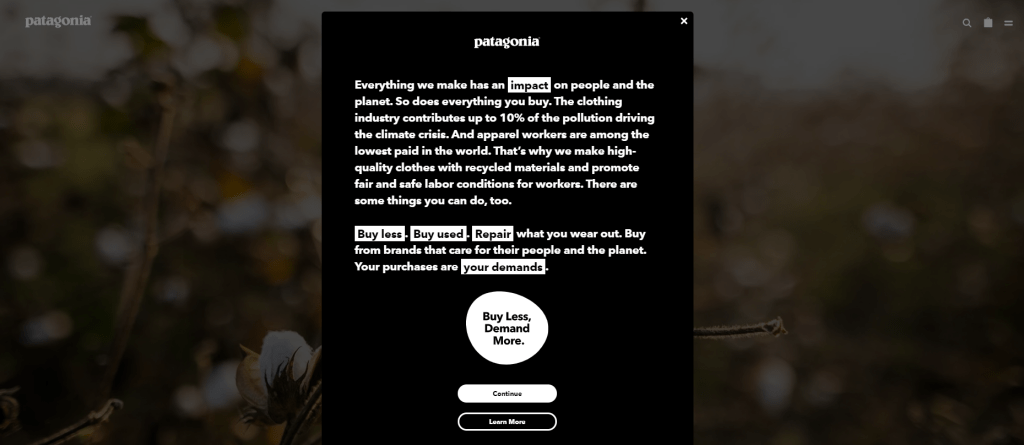
Patagonia are another brand who have boycotted the Black Friday hoo-ha. In previous years, they’ve run a ‘100% of proceeds go to saving the environment’ campaign, but this year’s a bit different. – https://www.prodo.com/blog/best-black-friday-marketing-campaigns

“Buy Less, Demand More” is an initiative pushing for a circular economy. This campaign integrates the company’s four-year-old ‘Worn Wear’ program which encourages recycling and repurposing used clothing and gear.

Now, customers shopping for new clothing items will see a button that takes them to refurbished alternatives on their ‘trade-in’ platform – sold at a lower price, of course, whilst simultaneously fighting against fast fashion.

I think this offering will encourage sales and appears to be an initiative with some longevity – 5/5.

Video for the campaign can be found here.

Ted Baker 3/5
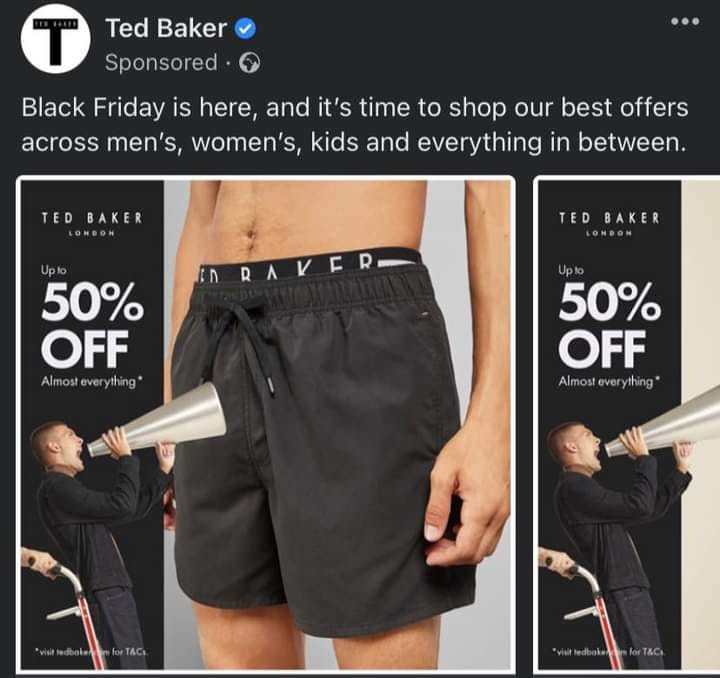
Ted Baker didn’t have a particularly standout offering this year, but they gained a lot of attention on social media for their unfortunate choice of graphic overlay for their Facebook Catalogue ads.

You may have seen this screenshot posted on your timeline and, no, I don’t think this was done purposefully as a marketing stunt. It appears the marketing team chose an overlay to use on their catalogue ads and didn’t consider how it would work with their entire range of products (understandable – who has the time for that?!). But, unfortunately, the graphic didn’t work so well with certain products.

A mishap? Yes, clearly. BUT I think this was a bit of a happy accident, because a lot of people ended up talking about Ted Baker and searching them on socials, which will have consequently led to an increase in website traffic.

GiffGaff 3/5
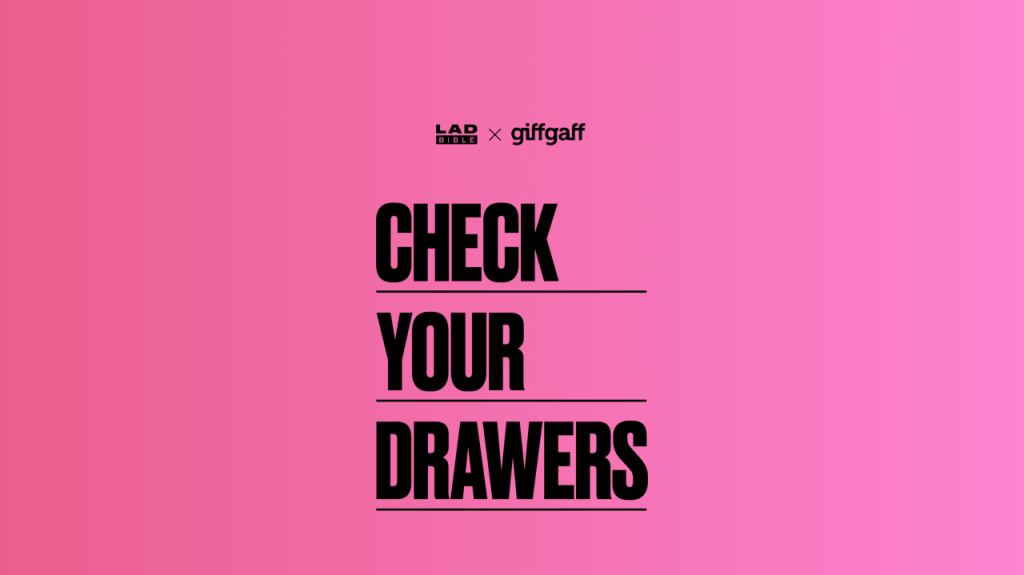
GiffGaff partnered with LadBible for their Black Friday campaign: ‘Check your drawers’. The aim is to encourage mindful consumption by imploring the nation to reacquaint themselves with the contents of their drawers, specifically old mobile phone handsets.

GiffGaff explain that their ambition is to create a circular economy and build a sustainable model for the industry by getting these preloved devices back into circulation.

Clearly a great initiative regarding sustainability with some positive PR thrown in, but I’m not sure how well this will encourage future sales.

Video for the campaign can be found here.

AllBirds 3/5

AllBirds – have you heard of them before? I hadn’t, but I’m not exactly their target audience.

However, I did hear about their “Break tradition, not the planet” campaign. Another brand against Black Friday this year, instead of throwing customers a discount, AllBirds have raised their prices as a stand against consumerism. Each product has had its price increased by $1 which will be matched by the brand and donated to Greta Thunbergs’s Climate Strike movement ‘Fridays for Future’.

Whilst I admire their strong stance against consumerism, I’d be interested to see if this campaign paid off in the way of sales. Brands can strive for a greener fashion economy all they like, but the end game continues to be achieving sales and making money, right?

Interesting campaign nonetheless, anything fighting against fast fashion is good with me.

Deciem 4/5
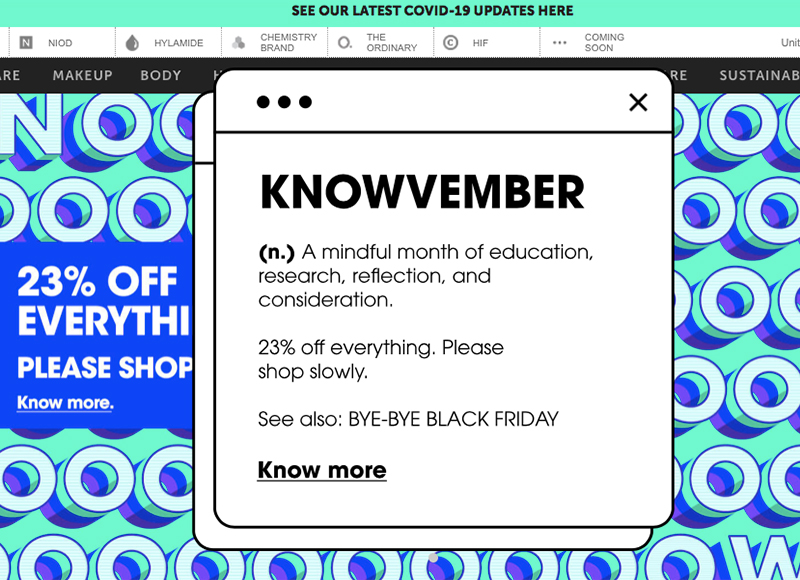
Deciem, parent company of The Ordinary (amongst others), are another brand that decided to boycott Black Friday this year. Instead they are discounting their products by 23% for the whole of November.

They’ve titled this campaign Knowvember as they say they’ll be raising awareness of the climate crisis in the process. This sounds a bit like virtue signalling to me, but I genuinely think this will drive sales in the run up to Christmas.

Also, I really agree with this quote from Deciem co-founder and chief executive Nicola Kilner: “The reality is that if you wouldn’t pay full price for it, it’s probably not something that you truly did need in the first place.”. Spot on.

Video for the campaign can be found here.

Summary

All in all, this year has brought much of the same in terms of Black Friday marketing campaigns. You have those who resist and protest against consumerism, and those who follow the crowd (sometimes at the expense of the environment and their workers – looking at you, PLT).

Black Friday can be a great opportunity for businesses, especially those smaller companies who have really struggled this year, but there is definitely a right and wrong way to go about things.


Responding To Negativity As A Business

Receiving engagement on your business posts is usually a positive, but on the (hopefully rare) occasion that a user comments negatively – what do you do?

It’s never nice to be criticised and I think a natural reaction is to panic a little bit. Do I respond? What should I say? How many people have seen this already?

The best thing to do is to step back for a second, breathe, and think calmly. Is the offending comment true and relevant? If the user is reporting a problem, has it since been resolved?

In customer-facing industries, we have to pay special attention to the idea that the customer’s always right. Yes, it is often easier to appease someone by agreeing with them, but when you are online, the dynamics are a little different.

We’ve all heard the saying “Once it’s on the internet, there’s no pulling it back” and, whilst that’s not always true, it’s worth bearing in mind when it comes to negativity. One short, hot-headed reply could land you in trouble with future customers for years to come.

So, what should you do when people leave negative comments or reviews on your online business activity?

How to respond

Firstly, make sure what they’re saying is correct. I’m not suggesting that you ever call a customer a liar, but there are ways of diffusing tense situations if you can calmly prove that these claims are false.

If the comment is true, then check to see if the problem has been resolved before replying. For example, if someone is complaining about an order being delivered faulty, you may have already sent out a replacement or given them a refund – spell this out in your response. Prospective customers seeing this interaction will be reassured to see that you handle problems in an efficient manner.

Secondly, make sure the comment is relevant. Are they talking about your business specifically and are they a genuine customer?

When marketing for an estate agent, I once received a comment complaining about estate agents in general – I addressed it directly by saying “We’re sorry that you’ve had a negative experience with estate agents in the past. We see you haven’t worked with us before, so feel free to get in touch to see how we could help you.”. Exposing irrelevant comments helps to disassociate the business from the negativity whilst remaining polite and helpful.

On that note – apologise to customers when they’re unhappy, BUT be careful what you’re apologising for. I prefer saying “I’m sorry you haven’t had a positive experience with us so far”, instead of explicitly addressing their complaint; avoid seeming to assume guilt.

Lastly, if a comment is true, relevant, and you haven’t yet fixed the issue, BUT the criticism is written in a constructive manner – say thank you. Adding a short sentence along the lines of “Thank you for your feedback, we’re committed to constantly improving the experience for our customers.” can show users that you’re not being defensive and you’re happy to learn.

Summary

In my opinion, it is incredibly important to address all online negativity towards your business. By ignoring complaints, it can make you look ‘guilty’ or as if you don’t care about your customers’ feedback. The key things to remember are: be polite and as helpful as possible.

Evolving Video Consumption Behaviours

Last Wednesday, Snapchat released a study on how video consumption behaviours have evolved recently.

I didn’t think the findings were all that surprising but it’s always reassuring to have your opinions backed up with fact. I’ve summarised the key points and my thoughts below:

Optimise Video For Mobile

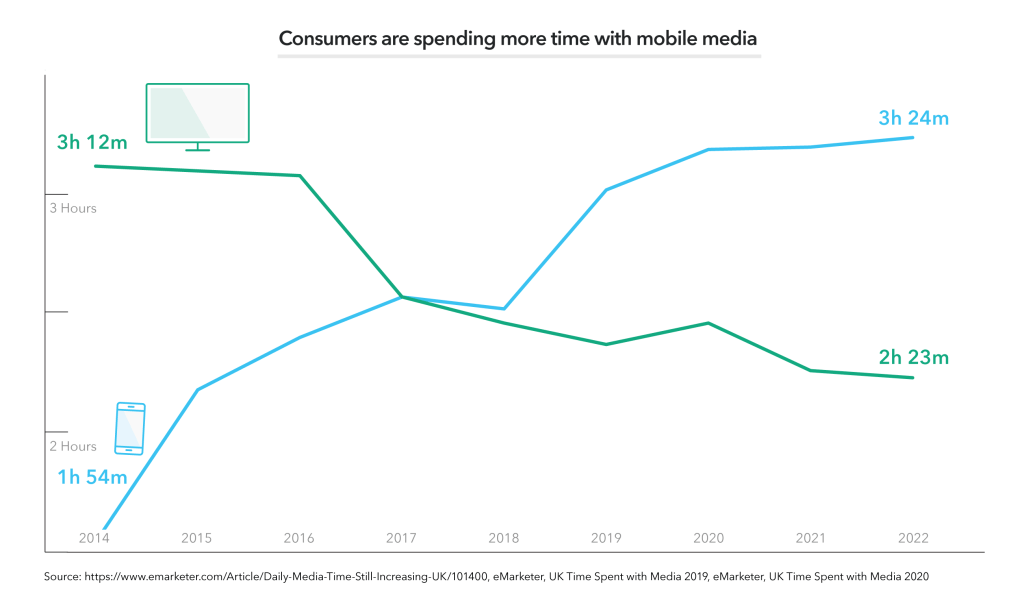
Firstly, mobile phone usage now far exceeds the number of people using their PCs to watch video. In fact, daily video engagement on mobile devices has increased by 25% in 2020 alone.

This figure is typically higher with younger audiences. Whilst consumers tend to watch TV for an average of 2 hours and 23 minutes per day, Gen Z and Millenials are spending around 3 hours and 24 minutes on mobile devices.

Consequently, it’s wise to take this into account when formatting, for example: if you intend to create video content that can be repurposed for other channels, such as IGTV, appropriate aspect ratios should be considered.

Shorter Content is King?

It’s somewhat common sense that shorter video content is more popular than longer pieces as consumers are known to have shorter attention spans when using social media. But the study reveals that more than 8 in 10 consumers prefer short-form content, and that 54% say longer full-length programs or videos are too much of a time commitment for their busy lives (Sounds obnoxious, but that’s what the report said, I promise!).

Personally, I think this may be true for apps such as Snapchat and TikTok, which often feature much shorter videos (it’s worth bearing in mind that this study was conducted by Snapchat). However, considering the popularity of binge-watching Netflix, Youtube, and the fact that Instagram introduced IGTV to allow for longer video content, I don’t believe this to be a universal trend for all platforms.

Personable Content

Unsurprisingly, consumers like personable content that they find relatable and feel drawn to share with others. Apparently, people feel a stronger sense of community when watching short-form video content, likely because it is easier to digest and thus more shareable.

Personally, I think the rise in popularity of TikTok could be partly responsible for this. It has become far too easy to fall into a black hole of watching very short and entertaining videos, which has made longer content feel laborious in comparison. However, that is not to say that longer length videos are not still incredibly popular and valuable when marketing a business – simply that the chosen platform and audience must be greatly considered beforehand.


Overall, the key takeaways are:

  • Video content should be optimized for viewing on mobile devices.
  • Shorter videos tend to be more popular than longer pieces (depending on a number of variables).
  • In order to be popular, videos should be personable, relatable, and shareable.

It’s important to remember that this report is based on data collected by The National Research Group when interviewing Gen Z and Millenials. Therefore, the video consumption habits of older consumers do not necessarily follow these patterns.


Sources: https://forbusiness.snapchat.com/blog/uk-2020-vision-for-mobile-video

Pinning In A Pandemic: A Shift In Perspective

I love Pinterest.

Okay, I’m not an avid, public user with a large following and a carefully curated collection of boards, but I love it!

I use Pinterest for home decor research, motivational quotes, fashion inspiration, everything (All private mood-boards).

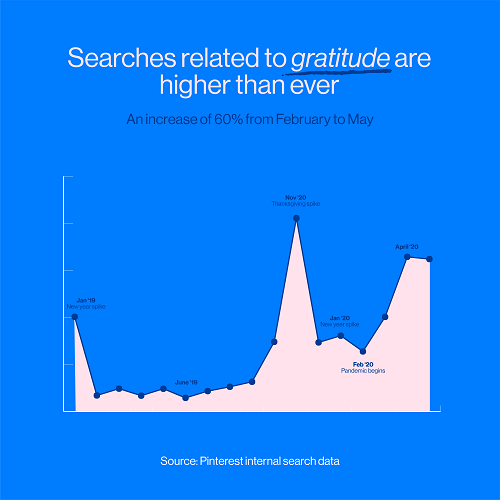
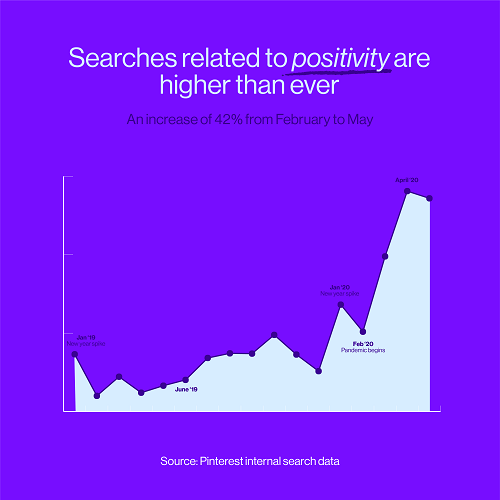
Consequently, I was especially interested to read about the Pinterest Insights report that was released on Tuesday (21st July). The report shows a real shift in searches and keyword use.

During lockdown, I have also noticed a change in my personal search history on the platform. In the place of ‘Office outfit inspo’, I’ve been searching for recipes, home workouts, positive quotes, etc.

I’m sure we’ve all been looking for entertainment in new ways since the craziness descended in March. So, I was not surprised (but relieved!) to discover that I haven’t been the only person to be using online platforms differently.

Some of the results that made me happiest were the increase in self-care related searches over the past four months, such as ‘exercise routine at home’, ‘meditation‘‘gratitude’, and ‘positivity’.

A lot of awful things have happened since March, but one silver lining is that people appear to be becoming more aware of the need to look after themselves, both physically and mentally. I think this is a shift in perspective that has been greatly needed for a long time.

I’m intrigued. Have you been taking to search engines and social media platforms for bursts of positivity and WFH inspiration?


Source: https://newsroom.pinterest.com/en/post/new-priorities-pinterest-insights

Comfort Zones

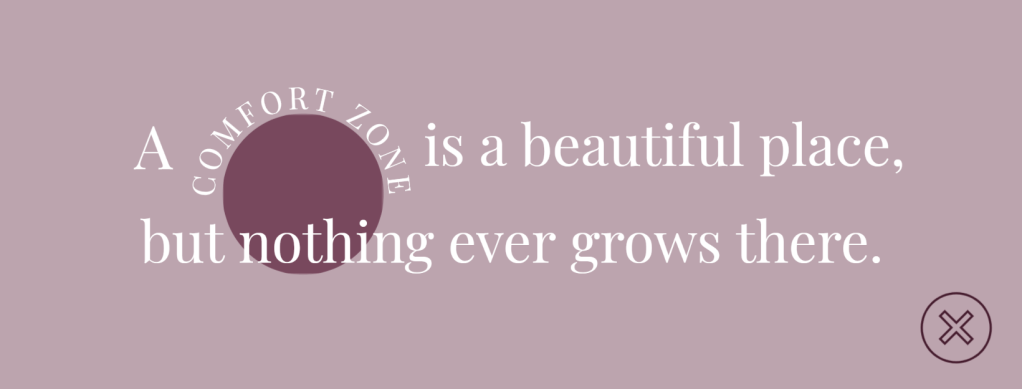
“A comfort zone is a beautiful place, but nothing ever grows there.”

– Unknown

I’ve never really thought much about comfort zones because I’ve never really felt like I’ve stopped myself from doing something because it was ‘scary’. Recently, it’s become more evident to me that these things develop as we do; what is considered to be your comfort zone at one point in your life will not be the same in a few year’s (or even week’s) time.

Career-wise, I’ve found that it’s quite easy to fit yourself in a box of what you know you can do and what you know you can do well. You may feel comfortable working for one company because your colleagues know you and they understand your skill level. Meanwhile, the idea of changing jobs to work with new people who have new expectations for you may be rather scary.

Being comfortable is not a bad thing. You can be perfectly content where you are and I’d say that you’re doing pretty well if you’re happy with your work situation.

But that’s the thing – are you happy? or are you merely content?

I’ve been stepping out of my comfort zone a lot since starting my position at my current company. I thought I would explore some ways that I have done so, which are ways that you may also have challenged yourself without realising:

1. New People, New Expectations

My current position is working for the first company that I have done Digital Marketing for professionally (besides my university and some small-business owners). I was hired to do something that I did not have extensive experience in, for people who did not yet know me and who had therefore established their own expectations of what I would be like. It is easy to obsess over the way other people see you, the things they expect from you, and their opinion of you and your actions. At the end of the day, what other people think of you is none of your business. Focus on the task at hand and doing the best that you can – if people don’t appreciate your efforts, they’re not your people.

2. Belittling Your Own Skills

I’ve always described myself as “not being a tech-wizard”. Whenever someone asks me about technology, that’s what I automatically say:

“Oh, I don’t know – I’m not a tech-wizard, sorry!”

Recently, I’ve realised that I’ve been saying this because technology is definitely NOT my comfort zone. I can’t code and please don’t ask me how to fix your computer because I have absolutely ZERO clue! However, I actually know a lot about technology, mainly because I have to use it a lot in my daily life. I’m trying to train myself to stop belittling my skills just because I’m worried I’ll get something wrong and be embarrassed. Everyone makes mistakes and, whether I say it or not, although I’m not an expert when it comes to technology, I definitely know my way around.

3. Doing New [Scary] Things

I do new things everyday at work: I try new software, explore new methods of doing things, take on new tasks. But not all new things are scary. It’s the scary, new things that push you out of your comfort zone.

For example: (referring back to point 2) I didn’t know the first thing about websites when I started my current job.

Apart from writing a few of my own blogs on WordPress, I had never really delved into the way that websites work. One thing I can tell you is: websites can be really confusing! There are a lot of elements that can go wrong when you edit a website, especially if you try to dabble in coding when you REALLY shouldn’t (I learnt my lesson with that one pretty quickly!). Websites are also a fundamental part of many businesses, so when you mess something up, you need to fix it equally as fast.

This is why I was a bit apprehensive to do anything with my company’s website. But, 4 months on, websites aren’t out of my comfort zone anymore … but coding still is! (*someone please teach me how to apply basic code*).

Overall, my current challenge for myself is to continually identify my comfort zone and make efforts to go beyond it. That isn’t to say that I do that everyday because, some days, being content is all that I aspire to be. But, each time I do something that stretches my comfort zone, it becomes less scary, less intimidating, and more doable.

Main takeaway: when you do something that challenges your comfort zone, regardless of how small it is – celebrate it!

Creating content in an apocalypse

Working in digital marketing, a key part of my job (if not the most important) is creating content.

Thinking of new ideas and ways to engage an online audience is difficult enough when life is normal. The internet is always changing and, with it, the way that people intake information. However, I have personally found that creating content has never been so difficult, yet so easy, as it is at the moment (and yes, by “at the moment” I am indeed referring to the impossible-to-ignore global pandemic. Fondly referred to by my family as the ‘apocalypse’).

I have a feeling that most content creators will currently be sat at either end of this spectrum, either finding it incredibly difficult to think of fresh ways to say “uncertain times”, or finding inspiration in the bizarre, new world that we’re living in. I’m no expert but, if you think the process of content creation hasn’t been changed at all, I’d say you were probably doing something wrong.

My current positions have me making content for two completely different organisations with vastly varying audiences and communication objectives. Whilst, at the beginning of lockdown, there were plenty of new content ideas flying around with everyone wanting to know what was happening in relation to x, y or z, 2 months in … the Coronavirus is getting pretty old.

I’ve just finished reading Dan Kelsall’s book ‘F*cking good content’, in which he discusses his views of scheduling social media posts. His primary argument is that content scheduled weeks in advance is rarely ever as relevant at the time of posting. In my opinion, this could not be more true in our current world. Restrictions are changing every few weeks, our moods are changing every few days, and it appears that Boris’ strategy is changing every few minutes. The content that we’re producing needs to reflect that.

I don’t think that my content is a perfect example of what I’m describing, but I’m not beating myself up about that. I’m trying to communicate with my audiences in a way that’s relevant to the situation. I’m trying to focus on starting conversations and creating new relationships. I genuinely think that, when all of this is over one day, people will look back at how businesses (and individuals) responded when faced with a crisis; they’ll remember how they were treated and how things made them feel.

There is no right or wrong way to cope with an ‘apocalypse’, but the least we can do, as content creators, is speak to our audiences in a way that is understanding of that. Hard selling doesn’t make sense in a lot of industries right now, but sharing values and working on brand image do.

My stir-crazed, isolation ramblings are not intended to lecture, criticise, or advise others on how to create content in these “unprecedented times” (had to throw that one in there for you, you’ve probably heard that 10 times today already), but I hope that we all use this change as a chance to be a little more human. Our audiences are built up of humans (and a few Instagram bots, no doubt), so our content should be tailored accordingly.

Now … back to my coffee and book, it is a bank holiday after all!